Comfortable Isn't the Same Thing as Safe — And Your Life Might Be Proving That Right Now
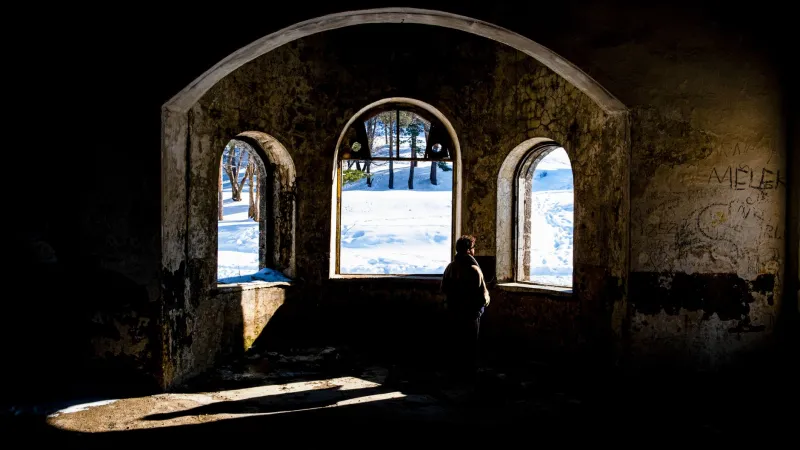
Let's be real about what the comfort zone actually feels like from the inside. It doesn't feel like a cozy blanket. It feels like going through the same motions on a Tuesday and realizing, somewhere around 2pm, that you can't remember the last time you were genuinely surprised by your own life. It feels like turning down an invitation because it's easier. Like staying in a job, a relationship, or a version of yourself that fits — but not particularly well.
The comfort zone doesn't trap you with chains. It traps you with familiarity. And familiarity is a much more convincing captor.
The Myth We've Been Sold About Growth
Somewhere along the way, the self-improvement conversation landed on this idea that growth has to hurt. That discomfort is proof you're doing it right, and if it feels easy, you're probably slacking. That framing has done a lot of damage.
Because here's what actually happens when people stay inside their comfort zones indefinitely: the zone itself gets smaller. What once felt like a manageable, even pleasant routine starts to feel like the only option. The world outside gets bigger and more threatening in your imagination, even as your actual life contracts. You don't feel the walls closing in — you just notice, one day, that there's less room than there used to be.
Growth doesn't require suffering. It requires novelty. It requires situations where your current skills and habits aren't quite enough — where you have to stretch, adapt, improvise. That can feel exciting. It can feel uncomfortable. It can feel both at once. But "hard" and "growth" aren't synonyms, and waiting for something that feels like punishment before you're willing to try something new is a trap.
What You're Actually Protecting
When you cling to a familiar version of yourself — even one that isn't working — you're not protecting your happiness. You're protecting your self-concept. The story you've told about who you are, what you're capable of, and what kind of person you are.
That story is powerful. It's also not neutral. Every decision you make either confirms it or challenges it. So when an opportunity shows up that doesn't fit the story — a new career path, a hard conversation, a chance to be seen differently — your brain doesn't evaluate it on its merits. It evaluates it based on whether it fits the existing narrative. And if it doesn't fit, the brain generates a very convincing list of reasons why this particular thing is a bad idea.
It's not laziness. It's identity protection. And it's one of the most human things there is. But it's also worth naming, because you can't make a real choice about something you can't see clearly.
The Fear Is Almost Always Bigger Than the Thing
Think about something you've been avoiding. Something you keep putting off because it feels too risky, too uncertain, too much. Now think about the actual worst-case scenario — not the vague, dread-flavored version, but the specific one. What would actually happen?
In most cases, the specific version is significantly less terrifying than the vague version. The vague version has room for your worst fears to expand without limit. The specific version has edges. It's survivable. It might even be recoverable.
This is what psychologists call affective forecasting — our tendency to dramatically overestimate how bad a bad outcome will feel and how long that feeling will last. We're wired to treat social risk, professional risk, and identity risk like physical danger. The brain sends similar signals whether you're about to pitch an idea to your boss or step in front of a moving car. The signals feel the same. The actual risk is wildly different.
You've survived hard things before. Probably more than you give yourself credit for. The other side of your comfort zone isn't guaranteed to be great — but it's also not guaranteed to be catastrophic. And right now, you're paying the cost of the uncertainty without getting any of the upside.
What's Actually Waiting on the Other Side
Here's what tends to happen when people actually step beyond their self-imposed limits, as opposed to what they imagined would happen:
They find out they're more capable than they thought. Not because the thing was easy — sometimes it isn't — but because capability isn't a fixed trait. It's something you discover in context. You don't know you can handle something until you handle it. And once you do, your internal map of what's possible updates.
They also find out that other people are less focused on them than they assumed. A huge portion of comfort-zone-clinging is about social fear — what will people think, what if I fail publicly, what if I look like I don't know what I'm doing. The reality is that most people are managing their own version of this same anxiety. They're not watching you as closely as your brain insists they are.
And perhaps most importantly: they find out that the version of themselves on the other side is someone they actually like. Not perfect. Not fearless. But more honest, more alive, more genuinely themselves than the carefully managed version they'd been presenting.
A Small Door Is Still a Door
This isn't a call to blow up your life or quit your job on a Monday morning. Dramatic change can be real, but it's not the only kind that counts. Sometimes the edge of your comfort zone is a conversation you've been avoiding. A creative project you've been too scared to start. A boundary you've been too nervous to set. A version of yourself you've been keeping quiet because it doesn't match the story people already have about you.
You don't have to walk through a giant door. You just have to find the one in front of you and actually open it.
The cage, it turns out, was never locked. It just needed you to reach for the handle.