Why Your Brain Keeps Defending a Version of You That Doesn't Exist Anymore
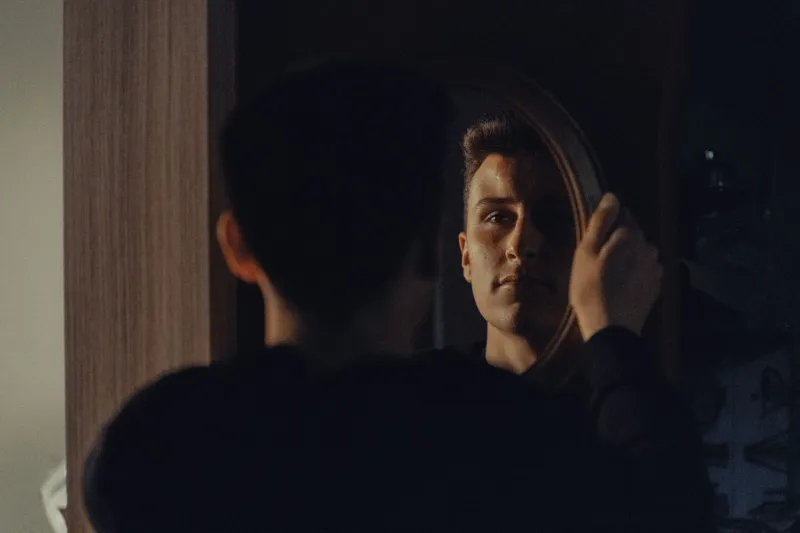
Here's something a little uncomfortable to sit with: some of the most limiting beliefs you carry about yourself aren't ones that were forced on you recently. They're old. Like, really old. And somewhere along the way, you stopped questioning them — not because they were accurate, but because they were familiar.
There's a strange comfort in being wrong about yourself. And once you understand why that is, everything starts to make a lot more sense.
The Brain Loves a Familiar Story, Even a Bad One
Your brain is, at its core, a prediction machine. It takes in information, matches it against what it already knows, and generates expectations about what comes next. This is incredibly useful when you're driving on autopilot or catching a ball. It's a lot less useful when the "information" it's working with is a self-concept you built at age fourteen based on what your older sibling said about you.
Psychologists call this cognitive consistency — the tendency to seek out and favor information that confirms what we already believe, even when those beliefs are hurting us. It's why the person who grew up being told they were "the difficult one" in the family might unconsciously create conflict in adult relationships. Not because they want drama, but because conflict feels like home. It matches the story.
When reality contradicts the story — when someone genuinely thinks you're easy to be around, or tells you you're talented, or treats you like you're capable — it can feel almost wrong. Suspicious, even. The brain flags it as an anomaly rather than evidence.
That's the trap.
Control Feels Better Than Accuracy
Here's the real kicker: outdated self-beliefs often stick around because they offer something that feels more valuable than truth — predictability.
If you already know you're "not a people person," you don't have to risk showing up to the party and finding out. If you've already decided you're "bad with money," you don't have to try a budget and potentially fail at it. If you've accepted that you're "just not the ambitious type," you're protected from the vulnerability of actually wanting something and not getting it.
Being wrong about yourself, in a weird way, keeps you in control. You've already written the ending. You don't have to audition for a role you might not get.
But here's the thing about that kind of control — it's a cage you built yourself and then forgot you had the key to.
The Identity You're Protecting Might Not Even Be Yours
A lot of us are walking around with self-concepts that were handed to us by someone else. A parent who was dealing with their own stuff. A teacher who didn't have the bandwidth. A friend group in middle school that needed someone to play a specific role. An ex who needed to make you smaller to feel bigger.
We absorbed those versions of ourselves and, over time, started performing them so consistently that they started to feel like the truth. But performance and identity are not the same thing — even when the performance goes on long enough that you stop remembering you're doing it.
The question worth sitting with isn't just "Is this belief true?" It's "Where did this belief even come from?" Because tracing a belief back to its source has a way of shrinking it. It's a lot harder to take seriously the voice that says you're not smart enough when you realize it sounds suspiciously like a seventh-grade math teacher who made you feel stupid in front of the whole class.
What Updating Your Self-Image Actually Feels Like
People often imagine that releasing an old self-belief will feel liberating right away — like some kind of movie montage where you toss off a heavy coat and suddenly start running in the sunlight.
In reality? It usually feels destabilizing first.
When you start allowing yourself to be different from the person you've always believed you were, there's a period of genuine disorientation. Who am I if I'm not the one who always plays it safe? Who am I if I'm actually kind of good at this? Who am I if the story I've been telling doesn't hold up?
That discomfort is not a sign you're doing it wrong. It's a sign you're doing it right. Identity shifts are supposed to feel a little wobbly. That's what growth actually feels like from the inside — not triumphant, just... uncertain in a way that's starting to feel okay.
Practical Ways to Catch Yourself in the Act
You can't release a belief you haven't noticed yet. So start there.
Pay attention to your "I'm just" statements. I'm just not a creative person. I'm just bad at relationships. I'm just someone who gets anxious. These phrases are doing a lot of work. They're turning a pattern into a permanent identity. Notice when you use them and ask whether that's actually true — or just really familiar.
Look for evidence you've been ignoring. If your self-concept is "I'm unreliable," think hard about the last time you showed up for someone who needed you. If it's "I'm not a good communicator," think about a conversation that actually went well. The brain filters out contradicting evidence automatically. You have to go looking for it on purpose.
Borrow someone else's perspective — temporarily. Ask a trusted friend how they'd describe you. Not for validation, but for data. You might be surprised how different the picture looks from the outside. You don't have to fully believe their version, but try it on like a jacket. See how it fits.
Give the new belief a trial run. You don't have to wholesale replace "I'm not creative" with "I'm an incredibly creative person" overnight — that's just swapping one overclaim for another. Try something softer: "I haven't really given my creativity much space." That's honest. That's workable. And it opens a door instead of closing one.
You Don't Have to Earn the Right to Be Different
Maybe the most important thing to understand is this: you don't need a dramatic reason to update who you think you are. You don't need to have gone through something huge, or hit rock bottom, or read the right book, or finally be "ready."
You're allowed to just... decide that an old belief doesn't fit anymore. You're allowed to look at a story you've been telling about yourself and say, "Actually, I don't think that's true, and I'm done repeating it."
The you that exists right now — not the one from ten years ago, not the one your family still sees at Thanksgiving, not the one your first boss had an opinion about — that version of you is allowed to be different. Quietly, without ceremony, without needing anyone's permission.
You or me gets to decide who we are. That's kind of the whole point.