Chasing Likes From Strangers While the People Who Love You Wait
Let's be honest about something that's a little uncomfortable to say out loud: a lot of us are working really hard to impress people who couldn't pick us out of a lineup.
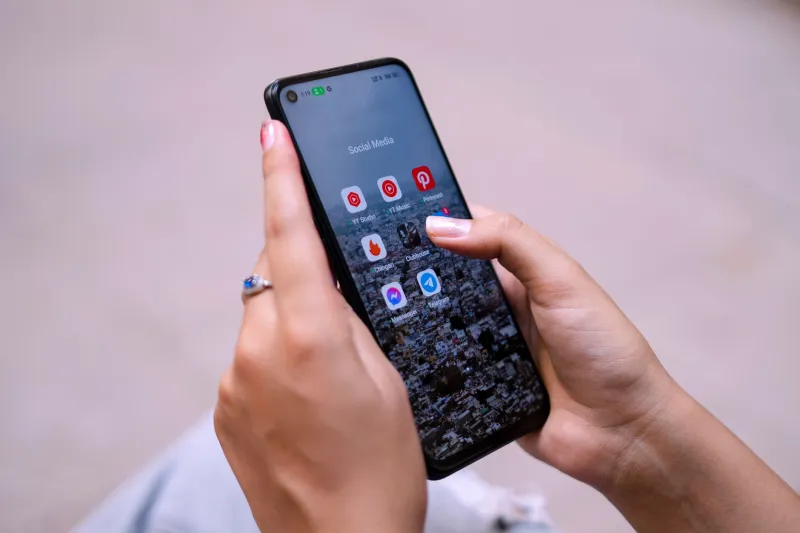
We craft the caption, pick the filter, rewrite the bio, and then refresh the screen every twelve minutes waiting to see if strangers on the internet decided we were worth a double-tap. And when the numbers come in strong, there's this little rush — a warm, chemical "yes" that feels suspiciously like being told you matter.
Except those strangers don't know your last name. They don't know what you look like when you've been crying. They've never seen you nervous, or weird, or wrong about something. They only know the version of you that you carefully assembled before hitting post.
So why does their approval feel so good? And more importantly — why does it feel like enough?
The Psychology Behind the Performance
Approval-seeking isn't new. It's not a social media invention. Humans are wired to want belonging — it's baked into our evolutionary history. Back when being rejected from the group meant actual danger, our brains learned to treat social acceptance like a survival signal. That wiring doesn't just disappear because we moved the social arena online.
What the digital age did do is give that wiring a 24/7 slot machine to play with.
Platforms are designed to make the approval loop faster, louder, and more addictive. A notification is a tiny hit of dopamine. A viral post is a jackpot. And just like any slot machine, the unpredictable reward schedule is what keeps you pulling the lever. You don't know when the next hit is coming, so you keep checking. Keep posting. Keep performing.
Psychologists call the deeper pattern "contingent self-worth" — the idea that your value as a person is conditional on how other people respond to you. When your self-esteem is tied to external feedback, you're essentially handing the remote control to your inner life over to whoever happens to be scrolling past.
And here's the kicker: the people holding that remote don't even know they have it.
Who Are You Performing For, Exactly?
Try this exercise. Think about the last thing you posted publicly — a photo, a story, an opinion, whatever it was. Now ask yourself: who were you hoping would see it?
Not in a general "my followers" sense. Specifically. Was it an ex? A coworker you want to impress? A version of yourself from five years ago that you're trying to prove something to? A vague, imaginary audience of people who finally get it?
Most of the time, we're not actually performing for the people in our lives who know us deeply. We're performing for a composite — an imaginary jury made up of everyone we've ever wanted to impress, all mashed together into one impossible-to-please panel of judges.
That panel doesn't exist. But we exhaust ourselves trying to win their approval anyway.
Meanwhile, the people who actually know your real name — your full name, your middle name, the nickname only your family uses — those people are just... waiting. Watching you chase something they'd never ask you to chase.
The Mask Gets Heavy
Here's what approval addiction does to identity over time: it slowly replaces you with a curated performance of you.
It starts small. You don't post the honest opinion because it might get pushback. You frame the story in a way that makes you look better. You leave out the messy parts. You lean into the version of yourself that gets the warmest reception, and you quietly sideline the parts that don't play well to an audience.
None of that feels like a big deal in the moment. But do it long enough and you start to lose the thread of who you actually are underneath all the editing.
Some people hit a point where they genuinely don't know what they think about something until they've tested it with an audience first. That's not self-expression anymore — that's crowdsourcing your identity.
And the cruel irony? The more you chase external validation, the less satisfying it feels when you get it. Because somewhere underneath, you know the applause isn't really for you. It's for the character you've been playing.
Shifting the Compass Inward
The goal here isn't to become someone who doesn't care what anyone thinks — that's not realistic, and honestly, it's not even healthy. Other people's perspectives have value. Feedback matters. Connection matters.
The goal is to change whose opinion carries weight.
Start by getting honest about your validation sources. When you make a decision — about what to share, what to wear, what to say, what to pursue — whose imaginary reaction are you running it through? Is it someone who knows the real you? Or is it that phantom jury of strangers and half-relationships?
Then, deliberately practice checking in with yourself before you check in with the audience. Before you post, before you share, before you adjust yourself to fit the room — ask: What do I actually think about this? How do I actually feel? Not how you want to be perceived. Not what will land well. Just: what's true for you right now?
It feels weird at first. It might even feel selfish, which is its own kind of signal worth paying attention to.
Another shift worth making: start investing in the relationships where you don't have to perform. The friendships where you can say the half-formed thought, admit the embarrassing thing, show up without the filter. Those relationships — the ones where someone knows your actual name and likes you anyway — are where real validation lives. The kind that actually sticks.
You Are Not Your Metrics
Your follower count is not your worth. Your engagement rate is not a personality assessment. The number of people who liked your last post is not a measure of how interesting, valuable, or lovable you are as a human being.
This sounds obvious when it's written out plainly. But our brains treat it like a lie, because the dopamine hits have trained us to feel otherwise.
The work of breaking an approval addiction isn't dramatic. It's not a single moment of clarity where you delete all your apps and move to a cabin. It's quieter than that. It's the slow, consistent practice of asking yourself what do I think before you ask what will they think. It's choosing to care more about how you feel in your actual life than how your life looks from the outside.
It's deciding that the most important audience for your story is you — and the people who've earned the right to hear the unedited version.
Because here's the truth that approval addiction tries to hide from you: the opinion that matters most has always been the one you have about yourself. Everything else is just noise you've been mistaking for signal.
You or me — at the end of the day, the only vote on who you are that actually counts is yours.