Who's Actually Running Your Life — You or the Algorithm?

The Invisible Curator of Your Identity
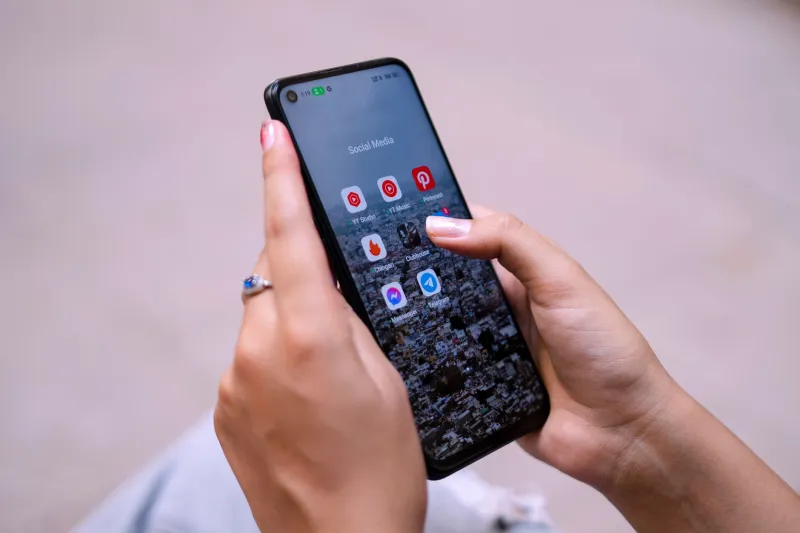
Let's be honest: most of us don't pick our own music anymore. We don't really choose what to watch, what news to read, or even who to date in any truly independent way. We open an app, and something — some invisible system built by engineers in a glass building somewhere in California — makes those calls for us.
And it's not just entertainment. These recommendation engines are quietly shaping something much bigger than your Friday night playlist. They're shaping you.
That sounds dramatic. But think about it for a second. The YouTube rabbit hole that introduced you to a political commentator you now quote at dinner. The Spotify algorithm that decided you're a "sad indie" person and just... kept feeding that. The LinkedIn feed that's been pushing you toward one type of career content so consistently that you've started to believe it's the only path worth taking.
None of that was accidental. And none of it was entirely your choice.
How Recommendation Systems Actually Work (In Plain English)
Algorithms are built to optimize for one thing above everything else: engagement. Not your growth. Not your happiness. Not your authentic self-expression. Engagement — meaning they want you to keep scrolling, clicking, and coming back.
To do that, they study your behavior obsessively. Every pause, every like, every time you linger on a post for three extra seconds — it all gets logged. Then the system builds a profile. And here's where it gets interesting: that profile isn't just about what you like. It starts to predict what you'll like next. It nudges you incrementally, deepening the grooves of your existing preferences until those preferences feel like personality.
You thought you were using the app. The app was using you as data.
Dating Apps and the Identity Problem Nobody Talks About
Swipe culture deserves its own conversation here, because dating apps might be the most intimate arena where algorithmic identity-shaping plays out.
When you use Tinder, Hinge, Bumble — whatever your platform of choice — you're not just looking for a partner. You're also being asked to compress yourself into a profile, and then you're being matched based on behavioral patterns the app has identified in millions of users. The app learns what "type" you respond to and serves you more of it. Over time, your idea of who you're attracted to gets narrowed by what the algorithm thinks you want, not necessarily what would actually be good for you or make you genuinely happy.
There's a real difference between discovering you're drawn to someone unexpected in real life versus only ever seeing the same algorithmically curated "type" in your queue. One expands your self-knowledge. The other quietly shrinks it.
The Career Path You Didn't Exactly Choose
Here's a scenario that might feel uncomfortably familiar: You spent a few weeks casually researching one career field online. Maybe you watched some videos, read a few articles, followed a couple of influencers in that space. Before long, your feeds were saturated with content reinforcing that path — success stories, how-to guides, salary breakdowns. It started to feel obvious. Like the right move.
But was it your move? Or did you get slowly convinced by a feedback loop that mistook your curiosity for conviction?
This is the quiet danger of personalized content. It's incredibly good at making one option feel inevitable. It doesn't show you the full picture. It shows you a very specific, highly curated slice — and then it shows you that slice again and again until it looks like the whole landscape.
Reclaiming the Wheel
None of this means you need to delete every app and move off the grid. That's not realistic, and honestly, it's not necessary. What is necessary is building some intentional friction back into your decision-making process. Here's where to start:
Do a values audit, offline. Grab a notebook — an actual physical one — and answer these questions without Googling anything: What do I care about? What kind of life do I want? What makes me feel like myself? The goal is to get your unfiltered, uninfluenced answers down on paper before you let any algorithm weigh in.
Deliberately seek out the opposite. If your feed is heavy on one type of content, intentionally go looking for the counterpoint. Read the article that challenges your current worldview. Follow someone whose career path looks nothing like the one your LinkedIn feed keeps pushing. Friction is where real self-discovery happens.
Use dating apps with a wider lens. Before swiping, ask yourself: am I reacting to this person, or am I reacting to a pattern the app has trained me to prefer? Give people a chance who don't fit the mold. You might surprise yourself.
Set a "decision-free" zone. Pick one area of your life — music, books, weekend plans — and commit to making those choices yourself for 30 days. No algorithm, no recommendation engine. Just you, trusting your own instincts. It'll feel weird at first. That weirdness is the point.
Talk to people, not feeds. Some of the best career advice, relationship wisdom, and life direction comes from real conversations with people who know you. Not from a curated feed that only knows your click history.
You or the Machine — Pick One
Here's the thing about self-discovery: it requires some amount of wandering. It requires stumbling onto things you didn't expect, sitting with uncertainty, and making choices that don't have a guaranteed payoff. Algorithms are specifically designed to eliminate all of that. They're built to reduce uncertainty, to give you the next obvious step, to keep the experience frictionless.
But frictionless isn't the same as meaningful. And convenient isn't the same as true.
The version of you that emerges from a decade of algorithmic curation might be perfectly optimized for engagement — but is it actually you? Or is it a persona that got built in the space between what you clicked and what a machine decided to show you next?
You get to decide. But only if you decide to decide.
That's the whole point of this place, after all. You or Me isn't a passive question. It's a challenge. Because at the end of the day, the most important thing any algorithm could ever recommend is this: put yourself back in the driver's seat.